As a middle-aged, middle-class, relatively privileged (white, educated, male, heterosexual, tenured) college professor, engaged in teaching music, cultural history, and critical thinking, in a late-stage Empire whose particular addictions--specifically to leisure, material possessions, and the cheap energy which fossil fuels make possible--is rapidly destroying both subaltern societies and the planet's own ecosystem, I sometimes imagine I know what it must have felt like to be a lector or ludus literatus in one of the frontier provinces of late-stage Rome: Valentia (Wales and NW England), say, or Brittaniae (Cornwall). In such a biography, you're a very long way from the centers of power, you can feel and observe (as someone trained and teaching historical consciousness and a degree of cultural analysis) the way in which the larger society, the vast superstructure of privilege, is creaking, groaning, and breaking down. And you can observe, and experience considerable frustration regarding, the psychotic short-term greed and lust for power which leads those at the top of the economic ladder to enact ever more radical, repressive, and short-sighted activities to try to maintain control and keep the addiction fed: clear-cutting Britain to build ships, hiring barbarian mercenaries to protect the homeland, steadily hollowing-out the middle class in order to enrich the oligarchs behind the politicians, creating Praetorian guards of private contractors to guard them, squirreling away their wealth in private troves or in vast estates remote from the centers of conflict.
In a late-stage Empire, there is no middle class, there is no democracy, there is no historical vision, there is no investment in future generations or future resources--human, natural, financial. There is only the ever-accelerating drive to maintain the status quo of the wealthy, and to hold at bay, just under the surface of consciousness, the panic they feel in the very clear, but repressed realization that all the wealth, power, privilege, impunity are going to go away even so.
In such a world, what would you, as a humble teacher, civil servant, carpenter, farmer, do, knowing that the powerful have no ears and no interest for any understandings except their own? What would you tell your kids, as you look at the disintegrating world you are bequeathing to them? What would you tell your students, as you try to impart the modest skills and insight you've spent a lifetime developing to hold back the tide of collapse? It's an enterprise doomed to failure, after all: the oligarchs will behave more and more flagrantly, greedily, and destructively; the subaltern communities will more and more be goaded to attack one another; the middle class will continue to disappear; the poor servant class will expand geometrically even as their standard of living plunges; the planet will continue to degrade. And there is nothing, nothing, (or almost) nothing you can do about it.
What would you do? Well, in your small distant corner of the world, very far from the centers of power, with nearly no voice and absolutely no influence in the public discourse of the day, you might just keep doing what you do: trying to directly impact those around you in positive ways; imparting the skills of critical reading, writing, listening, speaking, and thinking that help young people learn how to cope with changing, unknown, fluid, challenging problems requiring new and unique solutions; laying down in safekeeping, like bottles of wine in a cellar, the stocks of wisdom, history, literature, art, music, science, healing, that might otherwise be destroyed like the Library of Alexandria, and you might try to look forward, past peak oil or wealth, past societal breakdown and the fall of the oligarchs, past the destruction of the imperial Cities and their way of life, past the ensuing Dark Ages...
...to a time when, possibly from the far distant provinces which were least touched by the Empire and soonest abandoned, a few peregrini, a few wandering travelers and scholars, might return toward the center, and begin to rebuild. The new society upon the ruins of the old.
Because what else is there to do? Despair may be inevitable--but it is also irrelevant.
Sunday, March 02, 2014
Holding back the tide in a late-stage Empire


Saturday, February 08, 2014
Dem Boyz (on the 50th anniversary of the Sullivan shows)
Monday, November 25, 2013
Quick hit: the Irish Triads, and, what it takes to be an "---ologist"
Sunday, October 27, 2013
The "Wisdom" hashtag
Quite some time back, maybe when I first en-'twittered, I got into the habit of using hashtag sparingly and specifically, and seldom/never the hashtags that were "trending" ("yes, please, let me tag along on the daisy chain of lemming-like shiny media objects!"). More often, I used them a little more like keywords or tags--that is, as ways of identifying particular items as addressing one or another topic I knew I'd revisit and which I inferred others might possibly treat similarly. The first of that series, I think, was the #NuminousMoment hashtag--just a way for me to record and remind myself of certain mindfulness realizations, as or nearly when they occurred. A lot of time they are realizations about the natural world, weather, animals, and other close-to-the-senses moments--the sort of things that can be the kernel of poems.
But the "#<>Wisdom" hashtag is a little different. In my life, as I suspect in those of many others, certain professions--certain jobs--have taught me certain skills and provided certain insights: maybe even "rules for living." So #CarpentersWisdom, #ProfessorsWisdom, #BandleadersWisdom, #ITMWisdom ("Irish Traditional Music Wisdom"), #CooksWisdom are insights that come out of my having held those jobs: e.g., "Pay Attention" might be good practical safety advice under the heading of #CarpentersWisdom or #CooksWisdom, but it's probably also sound, if more metaphorical, when you're dealing with the moment-by-moment improvisation of the bandstand or the classroom.
At the same time, the "#<>Wisdom" hashtags do not only connote "here's the magisterial advice upon which, from my position of vastly greater and meaningful life experience, I will pontificate" (though sometimes such vanity slips through). It connotes, at least as commonly, the self-directed advice "hey, dummy, remember when you learned through painful error not to take your eye off the Skil-Saw blade? You wanna remember that accident the next time you find your attention slipping, please?"
In other words, the #<>Wisdom hashtags can connote: "here's something I learned in the trades, and which either you or I might do well to remember." But it can also connote "hey, dummy, your profession is particularly prone to this or that stupid unnecessary error" (more commonly that's the "Professors" or "Bandleaders" tag) "and maybe you oughta avoid it, huh?"
So if, in my social media stream, you see a #<>Wisdom hashtag, you can figure that it means either "hey, here's something I learned sometime that's worth remembering," e.g., "Professor's Wisdom" for others, but equally likely "here's something you yourself, Coyote, ought to know well enough to remember."
It's a not-bad way to cultivate a record of some minimal degree of mindfulness. As much as one can.
Thursday, October 24, 2013
They shoulda listened to Orville Faubus from beyond the grave
Thursday, October 17, 2013
"Graduate Program Review for Faculty"
Don't ask me survey questions like this on a Thursday evening after a hard week and a glass of wine unless you want an honest answer (and I suspect you don't):
"What changes, if any, could be made to improve the quality of your graduate program(s)?"
Graduate stipends within my Unit (as set by the University) are scandalously low. Too few graduate TA lines are available. Too little financial support (especially TA positions) is afforded graduate students. Improvement in this area is essential.
More money for outreach. More money for national & international visibility. More money for graduate student research and conference travel. We produce a phenomenally high-value product with a shockingly low level of financial support from the university as a whole.
Tuesday, October 15, 2013


Monday, October 07, 2013
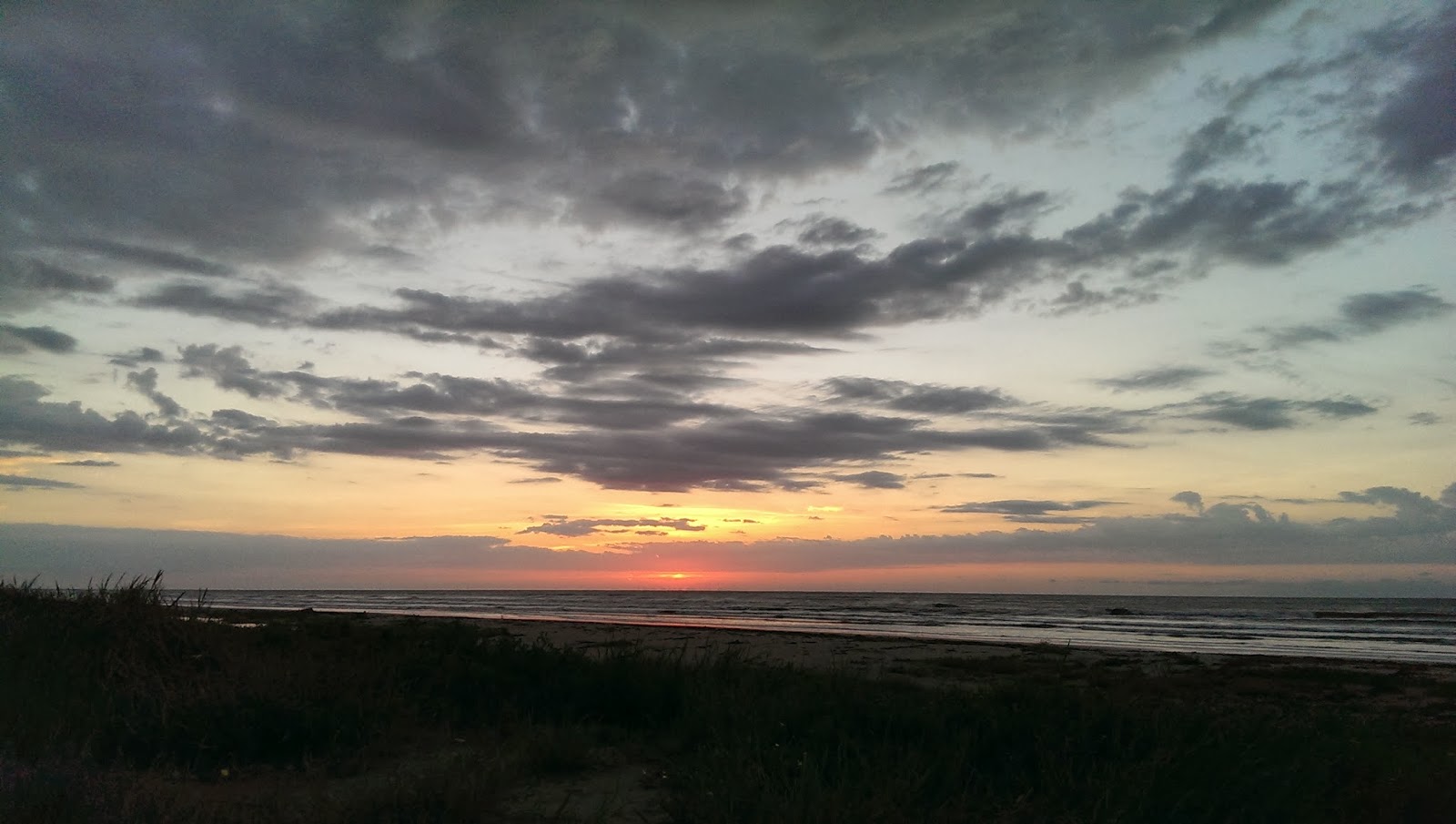
Autumn Equinox, edge of the continent




Sunday, September 29, 2013
New dispatches from the Bassanda Archives
Biographical sketch & image of Alexei Andreevitch Boyar, paratrooper, folklorist, and exponent of the Bassandan pipe organ tradition, and a fragment of poetry, translated from Old Bassandan, by Professor Homer St John, from the pre-literate shamanic chant. See http://elegantsavagesorchestra.weebly.com/bassanda-correspondence.html (and scroll to the bottom).
Tuesday, September 24, 2013
Monday, September 23, 2013
Society for Ethnomusicology - Special Interest Group: Ireland
Group moderator asked fora bio and suggestions for SIG's topical focii; here's what I said:
Chris Smith here, director of the Vernacular Music Center at Texas Tech (http://vernacularmusiccenter.org); full bio here: http://www.depts.ttu.edu/music/Faculty/ChristopherSmith.asp Play (for this music) tenor banjo, bouzouki, button accordion. Record, tour, produce, etc. Day job is Chair of Musicology at TTU. Have published practical methods (Celtic Backup), book chapters (relevant to this group: on Irish film, session culture, community arts, Renaissance-period harmonic languages in Ireland, Seamus Ennis), CDs (3-disc set with Altramar: historical performance settings of medieval Celtic repertoire), theatrical dance show ( http://dancingatthecrossroads.com ), new book on Anglo-Celtic and Afro-Caribbean interactions before the US Civil War (http://www.amazon.com/The-Creolization-American-Culture-Minstrelsy/dp/0252037766), new book project on street dance as rebellion in American popular history. I'll be presenting at Indy on a related topic. I've served as External Examiner for dissertations at UC Cork and U Limerick, and for the BA program in traditional music and dance at UL's Irish World Academy; may soon be starting similar appointment with the MA program. Teach an annual spring-semester course ("Music, Folklore, and Tradition in Irish Cultural History") at TTU, whose capstone is a 2-week Maymester "roving seminar" field-trip to Connacht; lot of friends in Galway, Clare, Limerick, and Mayo. Drive the damned mini-buses ourselves :-/
Sunday, September 22, 2013
CJS at TEDx Lubbock, on vernacular pedagogy "The Old Ways"
Disorganized, running very late, technology glitches, making it up as I went along. This is pretty much uncut CJS, slipping and sliding and trying to raise the loas.
Friday, September 20, 2013
Pome (2001) coyotebanjo.blogspot.com 9.20.13
Wednesday, September 18, 2013
Further to the previous: Mount's "Dancing on the Barn Floor"
Further to the previous: Mount's "Dancing on the Barn Floor"(1831--e.g., very early in his career: he was only 25): this would conventionally be understood as a conventionally pastoral idealization of rural experience: "lads and maids" dancing on the barn floor which, in the conventions of the time, is employed as a kind of theatrical proscenium. But, tracing some sketches from life which served as inspiration for this oil (most notably, as the book demonstrates, the remarkable pencil sketch "Comb and Brush"), it's possible to "see" elements of Afro-Caribbean / "creole" body postures and movements, especially in the dancing boy's hips, shoulders, and arms. This is the "hidden language" of the body that, among other things, the book identifies.

The Creolization of American Culture: from the Illinois U Press Author's Q&A
Q: Were there any common misconceptions of “creolization” that you examined in your research for the book?
I wouldn’t necessarily say there were “misconceptions,” so much as gaps in the record. The book certainly argues that creolization—the process by which two languages, or rhythmic vocabularies, or music & dance idioms, collide and create a shared dialect—was much more widespread in a much wider array of locations, and much earlier, than previous scholarship has perhaps understood. The argument would be that contact between disparate groups—black/white, African/European, slave/free, working-class/middle-class—would have yielded this exchange, whether participants intended or even recognized that it was happening. People heard other people’s music and they learned to move and experience sound differently, and in this new, shared dialect. I think, in fact, that this phenomenon—maybe we could call it “a creolization of bodily experience”—happens everywhere disparate populations come into close proximity with one another. I think it’s at the core of where urban culture arises.
I might suggest that one useful contribution the book provides to that sort of study is to develop a set of analytical tools (particularly rhythmic and iconographic) which let us “see” creole or Afro-Caribbean characteristics—rhythms, body postures, body movements—in tunes or scenes which, on the surface, seem to be “simply depicting” idealized Anglo-Celtic culture. The book suggests that we can identify creole motion—of the pelvis, hips, shoulders; of melodic shapes and rhythms—in the bodies of the dancers, even if they “seem” to be idyllic, pastoral shepherd boys and girls. I don’t necessarily think that Mount intended or consciously imported creole aesthetics into those body vocabularies—quite the contrary: I think that he was simply, accurately, precisely, and sympathetically providing visual reportage on the way that his neighbors and artistic models moved—and that those body vocabularies were already creole, even if the individuals he depicted didn’t consciously realize this.
Tuesday, September 17, 2013
The Bassanda Manifesto
[In reference to this; and this; and this, coming your way in January 2014]
Sunday, September 15, 2013
Michael Thelwell's "The Harder They Come"
In the 40th anniversary year of Perry Hensell's remarkable film--the first full-length feature ever made in Jamaica, the one that launched the astonishing riches of Jamaican syncretic music upon the world, the one that captured in remarkable verite techniques the based-in-fact but still archetypal story of the singer/gunman/Robin Hood character Ivanhoe "Rhygin" Martin--I have to give a shout-out to Michael Thelwell's remarkable novelization of the film.
Usually novelizations of existing films are just another way of merchandising the electronic media: I think of the execrable Rat Patrol novelizations I engulfed avidly at age 8, or the endless stream of Star Trek / Star Wars spin-offs, or the not-very-much better redrilling of the dry holes of the Bond or Zelazny "brands" long after their originators have passed on.
But what Thelwell has done is much different, much deeper, and still one of the best portraits of the roots of ska and reggae and of Rastafarianism I've ever encountered. Still assign it in my "Musics of the African Diaspora" seminar because, even if it is "fiction", it conveys the truth of those experiences more deeply, profoundly and truthfully than any ethnography of the region I've ever read. What Thelwell did, quite consciously and intentionally, was not to "novelize" the screenplay of the film--as is the usual, mundane practice--but rather to imagine the folk-story and ghetto myths upon which such a film might have been made. It's the same kind of thing that Peter Jackson et al did with The Hobbit. The originating book is a kid's book, but his mandate (no doubt economic) was to expand it into a tale that could sustain 2 or more feature-length films. So what they did, quite intentionally (and, I think, effectively), was to imagine that the children's book which Tolkien authored was in fact a "children's version" of a much more intense folk-tale of heroic grandeur. In this respect--whether Tolkien intended this or not--Jackson and crew are also able to draw upon the depth and richness of the world that Tolkien created in the Silmarillion. He wasn't a very competent storyteller, but (as the Bassanda experiment makes clear) there is a tremendous and engaging creative energy to be accessed by imagining, or recreating, a world.
That's what Thelwell does in The Harder They Come: he provides a nuanced, detailed, and rich back-story for Ivanhoe/Rhygin as Jimmy Cliff portrayed him in the film, but also a meditation on urbanization, the loss of home, modernization in Caribbean creole contexts, the roots of Rastafari (the way in which Thelwell compresses about 100 years of evolving Jamaican syncretic religion into one parade witnessed by Ivanhoe is a tour de force), the relationship between spirituality, ganja, and crime. It's a remarkable, virtuoso novelistic performance, and it accomplishes the remarkable trick of making the film deeper, more resonant, more profound.
Big ups to Ras Michael. Respect! http://amzn.to/15v1YMT
Saturday, September 14, 2013
Lead da Band
That’s also the job of the bandleader: to organize the shit that musicians do in a fashion that is unique, new, powerful, and expressive. The craft of the bandleader, particularly in the American musical traditions—in fact, the potential genius of that role, one that is largely ignored or neglected in the study of musicology because it involves organizing musical consciousnesses rather than musical objects—is putting people together. My friend & brother in music Roger Landes taught me that, with his remarkable festival-of-the-tribes called “Zoukfest”; he once said, “the whole point of having the festival is make it possible to put certain people in a room together at the same time, because you’re convinced that unique and beautiful things will happen.” Sometimes, as in the case of a festival or workshop or artists’ colony, you go to a lot of time, hassle, and expense in order to put those certain people (teachers and students, musicians and dancers, performers and audience) in a room together at the same time.
Because the craft and art of making musical, and musical events, is a time-bound phenomenon—unlike a sculpture or video or painting or installation, a music-dance-theatre event has to happen in the same chronological moment and (at least in the vernacular forms I work in) the same geographical space for both performers and audience. Yes, you can stream such events over the web, or live-cast on radio, and that at least permits audiences elsewhere to experience the event at the same time as those physically present: in Singapore, a highly secularized and regulated multi-ethnic city that also has a devout Muslim population, the Call to Prayer is broadcast over a certain radio frequency five times daily, so that the Faithful can at least hear the Call simultaneously as other others, even if in isolated physical environments; I had a Buddhist meditation teacher who said “all I need to know is that someone somewhere is sitting zazen at the same time as myself; if I know that, I know that I have a sangha, I know I’m not sitting “alone”.
But even the radio simul-cast or the web stream is imperfect and, in the case of the intimate communities of traditional music, it almost makes us sadder to know that our friends are out there somewhere in the world but can’t be here. Because vernacular/traditional events are about using music-and-dance to create community, sometimes in environments, locations, or circumstances that are far distant from the ideal, original, or remembered contexts in which the art forms began. The great gift of these forms is that they are so portable, resilient, and memorable that it is actually possible to engage in such re-creation.
But the best things happen when you arrange certain objects in relation to one another with a vision of those patterns’ expressive power, when you arrange for certain people to be together in a room because you have enough insight, experience, and sensitivity to recognize that simply arranging for that meeting will make good things happen. That’s why Bill Monroe, Muddy Waters, Art Blakey, Carla Bley, Buck Owens, Arthur Ailey, Duke Ellington, Charles Mingus, Frank Zappa, David Baker, Kim Pineda and so many others would be artists of genius even they themselves had never played, dance, or even composed a note or motion themselves: because they had the insight, experience, sensitivity and—let’s face it—sheer bullheaded stubborn insistence upon the validity of their vision to put certain people together in a room. And then to trust that the artistic potential of that meeting, the sheer unchained creative energy that emerges when artists find new companions and new challenges. Two dancers from Louisiana. A handful of crazy hippie Baroque (and “broke”) musicians in Indiana. A mandolin player from New Zealand and another from Ireland. A bouzouki player from Alabama and another from Kansas City.
And this lot.
https://www.facebook.com/events/211334689031256/

